
There’s a reason the concept of life-balance circles has endured for decades. In my work with people seeking meaningful self-improvement, I’ve found the wheel of life isn’t just a visual or a trendy coaching tool. Used the right way, and updated for our connected, customizable digital age, it becomes a real engine for growth. In this guide, I’ll share how you can use this method step by step, translating a simple “snapshot of your life” into honest insight and practical progress—today and looking ahead to 2026.
What makes the wheel of life so effective for self-awareness?
I remember the first time I walked a client through drawing their own life-balance diagram. She had been talking about stress at work for weeks, but until she sketched out all the key parts of her life—health, friendships, learning, finances—she hadn’t realized the one-dimensional focus wasn’t just draining her energy, it was keeping her from a richer sense of accomplishment.
The wheel of life works because it transforms vague feelings into clear visual data.Unlike a written journal entry or a casual reflection, it brings the state of your main life areas into view all at once. Seeing that “wheel” mapped out exposes where you are thriving and where you’re still shortchanging yourself.
A picture makes patterns suddenly obvious.
Developed originally as a paper-based “snapshot” in the personal coaching field, the format typically includes a circle split into 8 categories, though that’s only a starting point. What’s most powerful, in my experience, is that it allows total flexibility. No two people’s lives fit the same boxes—so customizing your personal domains is not just allowed, but encouraged. This is a key feature in platforms like Wheel of Life, which lets you choose and name the areas relevant to your life stage and ambitions, going beyond generic labels.
A tool is only as good as its questions. The beauty of a balanced-living diagram is that it always asks: “How satisfied am I right now, here?” in each domain.From that simple question, self-awareness starts.
Where did the wheel of life begin and how is it evolving now?
Tracing its roots, the original idea has been part of coaching handbooks since the 1960s, inspired by psychologists and management thinkers who saw the need for practical, visual personal growth tools. Early practitioners noticed that most people, left to their own devices, measured success with only one or two metrics: money, title, or maybe health. The “wheel” view widened the lens, inviting reflection on community, learning, leisure, emotional well-being, and contribution.
In the last decade, I’ve seen this approach grow more refined and accessible. What used to require colored pens and a coaching manual can now be done, updated, and tracked over months or years using digital applications like Wheel of Life. These digital models add layers of insight: progress tracking, personalized reminders, exportable reports, and voice or text reflection.
The new era of self-tracking combines classic truths with technological flexibility. You no longer need to settle for one-size-fits-all categories; now, you set your wheel to match your reality.
What are the classic life domains, and can I change them?
There are standard slices most people start with—health, relationships, career, finance, fun, growth, emotional wellness, and purpose. Each of these represents an area needing conscious attention. Sometimes, though, these aren’t enough. As life changes, so do your priorities. Parenting, artistic pursuits, spirituality, or digital wellness might matter more for you.
When I set up a new wheel with a client, we spend as much time deciding “what counts” as we do rating satisfaction. That discussion by itself can be transformative. I’ve found that being allowed (and encouraged) to define your own domains builds ownership over the process.
Customization isn’t just a feature—it’s where real alignment and motivation begin.Tools like the Wheel of Life app make it easy to add, rename, hide, or reorder categories, keeping your framework in sync with your real priorities.
Step-by-step: Building your own satisfaction wheel in 2026
Based on my experience coaching and doing my own self-reflection, this is the sequence I’ve seen work best. Each step unlocks a deeper level of insight.
1. Choose your life areas thoughtfully
Start by listing all possible areas you care about. Use the common ones, like:
- Physical and mental health
- Friendships and romantic relationships
- Work or career development
- Financial wellness
- Fun, creativity, or leisure
- Personal growth, learning, or education
- Sense of community or contribution
- Spiritual or philosophical growth
- Life purpose or mission
Look at the list and add anything else that matters for you specifically. For some, this includes parenting, travel, or even “digital balance.”
What you measure will shape what you change. Be honest: don’t choose categories just because they look nice on paper.
2. Score your satisfaction in each area
Using a 1–10 scale, pause to think how satisfied you truly are with each segment. Take your time. I usually recommend thinking over recent weeks, not just one good or bad day.
You can do this with a printed template, or—my preferred way, especially now—with a digital version (like what Wheel of Life offers) where you slide or tap to rate each domain.
The goal here is not perfection, but honesty. If you can’t decide between a 4 or a 6, pick your gut instinct, then note your reasoning.
3. Visualize your wheel
Draw your wheel, or let the app generate one for you. Each category becomes a spoke or slice, colored in to the number you’ve just given it.
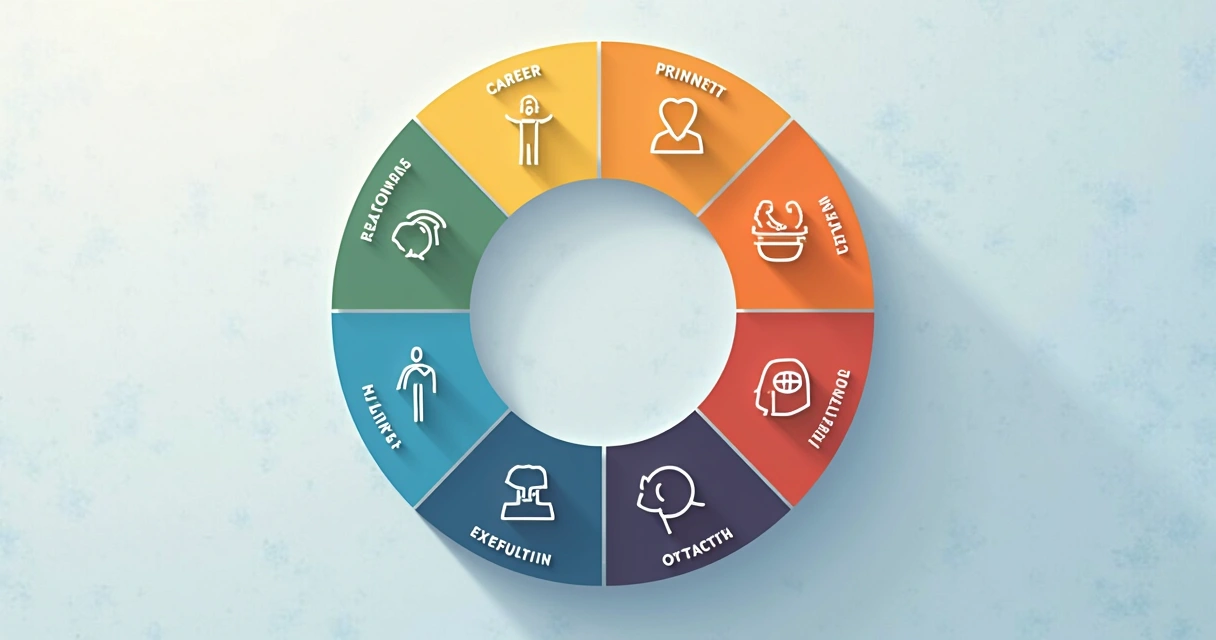
If you’re doing this on paper, connect the “points” out from the center, forming a shape—rarely a perfect circle! This visual difference is the point: smooth wheels roll well; lopsided shapes reflect imbalance.
Your real life isn’t symmetrical. That’s the story your wheel will tell.
If you’re using a digital tool, you can save and revisit your wheel over time—a feature I depend on for tracking change beyond first impressions.
4. Reflect on the meaning behind your scores
At this point, I always pause. Why are some areas strong while others stay weak? Is it time, truth, or maybe just neglect? I suggest writing a sentence or two explaining your numbers for each area, either by typing or recording your voice—something many modern tools now allow.
This “why” unlocks deeper self-knowledge than numbers alone.
Reflection is the bridge between data and understanding.Try asking yourself:
- What am I proud of in the highest area?
- What’s holding me back in the lowest?
- If my lowest domain improved, how would life feel?
5. Identify priorities for change
Often, my first instinct is to “fix” the lowest area. But sometimes, a small positive change in a mid-ranked domain has a ripple effect.
Don’t try to “max out” every area at once. Focus on 1–2 priorities at a time.Your real life has trade-offs; the wheel helps you pick which ones matter most right now.
6. Set practical action steps and SMART goals
This is where the mapping exercise becomes transformation. I’ve noticed that clients who stop at reflection rarely make lasting progress.
Take your target area and think: What single next action would nudge the score up by even half a point? Make your actions specific, measurable, achievable, relevant, and time-based (SMART).
- “Sleep better” becomes “Go to bed by 10:30 every weekday this month.”
- “Improve finances” becomes “Review spending with a finance app on Sunday.”
- “Connect with friends” becomes “Schedule one coffee with a friend this week.”
Mapping your goals into action is simpler when your life assessment tool integrates weekly task organization, as the Wheel of Life app does.
A goal without a plan stays a wish.Mark your actions, check progress weekly, and update your wheel as you go.
Why regular reviews supercharge self-improvement (and how to do them)
If there’s one habit I recommend to everyone—whether you’re new to self-development or a seasoned seeker—it’s making the review of your life wheel a regular practice.
Research by the Journal of Graduate Medical Education highlights that only a tiny portion of individuals felt their self-assessment processes were very effective. What makes the difference? Consistency, feedback, and turning insight into a feedback loop. I’ve learned that seeing my own wheel, quarter after quarter, changed my focus from short-term fixes to ongoing balance.

For most people, I recommend reviewing monthly or quarterly, with optional quick weekly check-ins. Some signs it’s time to update:
- A major life event has shifted your reality
- Your priorities or passions change
- You’ve reached a goal and need a new focus
- Your scores aren’t shifting, and motivation is fading
Doing these reviews digitally makes it simple to compare “before and after” wheels, spot new imbalance, or celebrate real improvements. That feature (exporting to PDF for coaching, personal archives, or accountability) is especially turnkey in digital platforms like Wheel of Life.
Reflection styles: Text, voice, and what counts as self-awareness
One surprise, as I’ve guided different people through ongoing reflection, is how preferences for the “how” of reflection affect insight. Some people think best on paper, some type, some talk. Including both text and voice as input methods, as Wheel of Life does, can make a reflection habit stick.
The key is not the format, but the commitment to real self-honesty.If you capture your thoughts in a way that feels comfortable, you’re more likely to be candid—and more likely to revisit your notes when updating your wheel.
From insight to action: Turning knowledge into progress
Even with the best visual map, nothing changes unless you turn understanding into daily habits. One of my earliest mistakes was thinking awareness alone would transform my outcomes.
Change happens when insight meets structured follow-through.That’s why breaking down your big goals into weekly or monthly tasks—then tracking results in the same platform where you self-assess—makes so much difference. It closes the loop between intention and reality.

This is where I’ve seen lives change, one checkmark at a time:
- Setting a recurring calendar reminder to review your priorities and scores
- Using integrated task lists to plan next steps and deadlines
- Celebrating small wins—moving from a 4 to a 5 is progress!
I always encourage those starting this path to notice incremental growth, not just end goals.
The role of self-assessment in true personal growth
As much as self-improvement is about taking action, it’s also about developing a kind of “meta-skill”: understanding yourself over time.
There’s growing evidence that effective self-assessment is hard. A systematic review by the NCBI Bookshelf found huge variance in how accurately people rate their needs across domains—from as low as 40% sensitive to over 90%. That’s a wide spread.
A clear, structured wheel of life process reduces blind spots and guesswork. Done regularly, it improves accuracy and motivation, too.
I’ve found that tracking my wheel over time has given me not just a map of where I am, but a history of how I’ve grown. Months when I felt “stuck” look totally different in retrospect, with concrete evidence of change.
Tips for interpreting your results honestly
If you want to make the most of your self-balance mapping, keep these tips in mind:
- Don’t judge yourself for low scores—they’re starting points, not failures.
- Be curious: ask why certain areas are thriving while others lag.
- Look for recurring patterns across months or years.
- Celebrate even small upticks, not just perfect tens.
- Share your results in supportive spaces, if you’re comfortable. Coaching, peer groups, or trusted mentors can add perspective.
How coaches and professionals use the wheel of life
In my work with personal clients and professional teams, I often build a balance wheel into coaching programs. The reason is simple: It sets a shared language for discussing goals beyond work or numbers.
Coaching applications include:
- Initial assessment: Starting a new coaching relationship by mapping today’s life domains
- Goal setting: Using low-score areas to set focused, achievable objectives
- Review and accountability: Comparing wheels over sessions to track movement and motivation
- Celebrating progress: Making visible the growth that might otherwise feel abstract
As a professional, being able to export these charts and progress notes (in PDF, for instance) saves time and allows for easier sharing—something I value in apps like Wheel of Life.

For team leaders, doing “anonymous” group wheels and aggregating results can uncover patterns—showing which domains need systemic improvement, not just individual change.
Applications for individuals: Using the wheel of life for your real goals
I see countless different ways people apply this framework for their unique goals. Here are a few examples:
Transitions and new life chapters
Whether entering parenthood, starting a new role, launching a business, or facing retirement, the “snapshot” lets you honor what’s changing and where to focus next. I’ve had clients use the wheel to see how becoming a parent changed their relationship, career, and health priorities almost overnight.
Recovery and well-being
After a health issue, break-up, or burnout period, mapping your new status gives you back some control. Celebrating tiny increases in your lowest domains (energy, hope, connection) becomes a lifeline. Those interested in deeper well-being can explore resources on well-being and recovery methods for additional strategies.
Balancing growth and enjoyment
Not every goal is about fixing what’s broken. Sometimes, it’s about amplifying what brings most joy or meaning. Increasing creativity, deepening relationships, or making more space for learning can be targets, too. If you want practical advice on balance, try exploring self-knowledge and personal reflection guides.
Tracking and celebrating results
Some people find looking back at the “stages” of their wheels as motivating as moving forward. Seeing that a once-weak area is now your strongest reminds you that change is possible. If goals are part of your journey, there’s a dedicated resource for goal-setting and achievement strategies for further support.
Making routine reviews a habit you’ll actually enjoy
I’ve had periods where my self-assessment habit slipped—for all the usual reasons: busyness, stress, lack of motivation. What got me back on track was turning my monthly review into a ritual, not a chore.
Here’s what I found helps:
- Pick a recurring day and anchor it to another habit (first Sunday of the month with a coffee, for example)
- Use music, scents, lighting, or comfortable spaces to make the process feel positive
- If you enjoy journaling, write a short note or story with each wheel round
- If you’re visual, add colors, sketches, or stickers—digital apps like Wheel of Life support this easily
- Set a short timer. Even a quick 10-minute review counts
Personalizing the experience makes review day something I look forward to—even when I know my “scores” aren’t perfect. Those interested in optimizing their review routine can learn more by checking out methods for boosting review habits.

Export and share: Why reporting matters for progress and celebration
One of the features I’ve come to value is exporting my wheels and reflections. Having a PDF (or other format) of my progress isn’t just for sharing with a coach or mentor—it’s a way to see my journey and celebrate milestones.
Some benefits I’ve seen from exporting or printing out my old wheels:
- Reviewing personal growth year-over-year
- Preparing for deeper conversations in coaching, therapy, or peer groups
- Tracking themes and triggers (for instance, how seasonal changes impact my scores)
- Sharing progress with loved ones on shared or overlapping goals
Having this archive is particularly meaningful during tough patches—it reminds me how even slow progress adds up.
Linking the wheel of life to other tools and approaches
A life assessment wheel isn’t the only tool in my kit. Depending on my goals, I connect it to habit trackers, gratitude journals, mental health resources, and more. For example, those exploring mental and emotional well-being can find valuable resources on mental health and self-care to supplement their regular wheel reviews.
What ties it all together is this: By seeing the “big picture” all at once, I avoid tunnel vision and keep all my domains in healthy tension.
Common missteps and how to avoid them
Having practiced and taught this for years, I’ve noticed a few traps. Here’s how to sidestep them:
- Using categories that don’t really matter to you. Make sure your wheel fits your reality.
- Getting bogged down aiming for perfect 10s. Progress is about movement, not max scores.
- Skipping reflection or ignoring “why” you rated as you did. Numbers are only the start.
- Making big plans but not setting up real, concrete next actions—and not tracking them.
- Judging yourself harshly for low scores rather than seeing them as opportunities.
The point isn’t perfection. It’s clarity. And with clarity, real change becomes possible.
Case studies: What change looks like in real life
Sarah’s rediscovery of balance after a promotion
Sarah, a mid-level manager, came to me burned out after a big career jump. Her “career” and “finance” segments were nines, but “health,” “fun,” and “romance” scored below four. Seeing it on her wheel made the imbalance undeniable. Over six months, we agreed on weekly conscious actions—like scheduled exercise, planned dates, and monthly hobby time. When reviewed at the end of the period, her wheel had smoothed out: small increases in neglected domains had lifted her overall satisfaction, even as her demanding job continued.
James’s transition after a relationship ended
After a major breakup, James’s “relationships” slice dropped to two. But he recognized that “personal growth” and “learning” still gave him satisfaction. He doubled down on these, then used his increased energy to slowly reconnect with friends. Tracking this over time, he saw that rebuilding social connections was slow but steady—inspiring hope and showing progress he couldn’t see day to day.
A team’s path to better well-being
A software team I worked with used the wheel as a group exercise. Most rated “work” and “growth” highly, but “health” and “fun” were lagging. Their manager responded by introducing team walks, dedicated non-work chats, and learning sessions. Three months later, all segments saw moderate rises—and, more importantly, morale and trust strengthened.
Embedding the wheel of life into your routine: Practical ideas
- Add a link to your wheel in your digital calendar; review right before or after key milestones, like birthdays or work reviews
- Share your wheel with an accountability partner for honest support
- Use a “quarterly reset” as an occasion to invite friends or family to build wheels together and share
- Plot progress on a wall or vision board using your exported wheels as visual markers
- Cycle your domain labels as your life shifts (for example: “Parenting” drops out, “Creativity” comes in)
Whether you use Wheel of Life or any other platform, making regular self-audits part of your personal development process boosts awareness and turns good intentions into real-world action.
Conclusion: Start now—your future can be more balanced
In the end, my experience has shown me again and again that clear, honest self-assessment with a tool like the wheel of life is the best start to any real improvement. It’s visual but flexible, structured while deeply personal, and most effective when it becomes an ongoing habit—not just a one-off exercise.
If you want better balance, sharper goals, or just to feel more in control of where your energy goes, begin with a snapshot—then return to it often, gently updating as your life unfolds. I’ve watched clients—and myself—move from frustration or confusion to genuine growth, simply by following this cycle.
To learn more, test digital features (like voice reflection or action tracking), or just try out your own wheel, check out the options Wheel of Life offers today. Your future self will thank you for starting.
Frequently asked questions
What is the Wheel of Life?
The Wheel of Life is a self-assessment tool that helps you rate your satisfaction in key life areas—such as health, relationships, work, finances, growth, and more—using a circular visual format. By giving a score to each domain and mapping them on the wheel, you get an instant snapshot of your overall balance and identify which areas need attention. This method makes it easier to track your personal development over time.
How do I use the Wheel of Life?
To use the Wheel of Life, select the life areas most relevant to you (usually 8–10), assign a satisfaction score (1–10) to each, and plot these on the diagram. Connect the dots to see your wheel’s shape. This shape shows your current balance and highlights gaps or strong points. Reflect on why you gave each score, then decide on a few specific actions or goals to improve lower-rated areas. Review and update your wheel regularly for best results.
Is the Wheel of Life worth trying?
Yes, the Wheel of Life is highly worth trying for anyone interested in self-awareness and personal growth. It offers a clear, visual summary of your lifestyle, reveals hidden strengths or imbalances, and translates insight into action steps—all of which can be tracked and improved over time.
How often should I update my wheel?
Most people benefit from reviewing or updating their Wheel of Life monthly or after any major life change. Monthly or quarterly reviews help you spot ongoing patterns, celebrate progress, and refocus your goals as your situation evolves. Weekly quick check-ins can boost motivation and keep you accountable.
Where can I find a Wheel of Life template?
You can find a variety of Wheel of Life templates both in print and digital form. For a customizable, interactive version that allows you to adjust categories, track progress, and reflect using text or voice, you can try out the features offered by Wheel of Life’s digital platform. These options often include PDF export for coaching or personal review.