
In my career working with people pursuing more meaningful and balanced lives, the simple image of a circle divided into key life areas never stops surprising me with its insight. I’m talking about the life wheel—a method that turns self-reflection into practical, visual understanding. Over the years, I’ve seen how coaching becomes far deeper, and change much more possible, when we use this tool thoughtfully.
What I want to share here is not just a description of the wheel, but a comprehensive and gentle walkthrough. I’ll guide you through the ten areas that I think give the most clarity for coaching conversations—helping people get “unstuck,” set priorities, and craft new action.
With support from platforms such as Wheel of Life, this journey becomes seamless—whether online or with pen and paper. But before we discuss the ten areas, let’s understand why this method works at all.
Pause and look at your wheel—it reveals a story only you can write.
Understanding the life wheel: a visual self-assessment
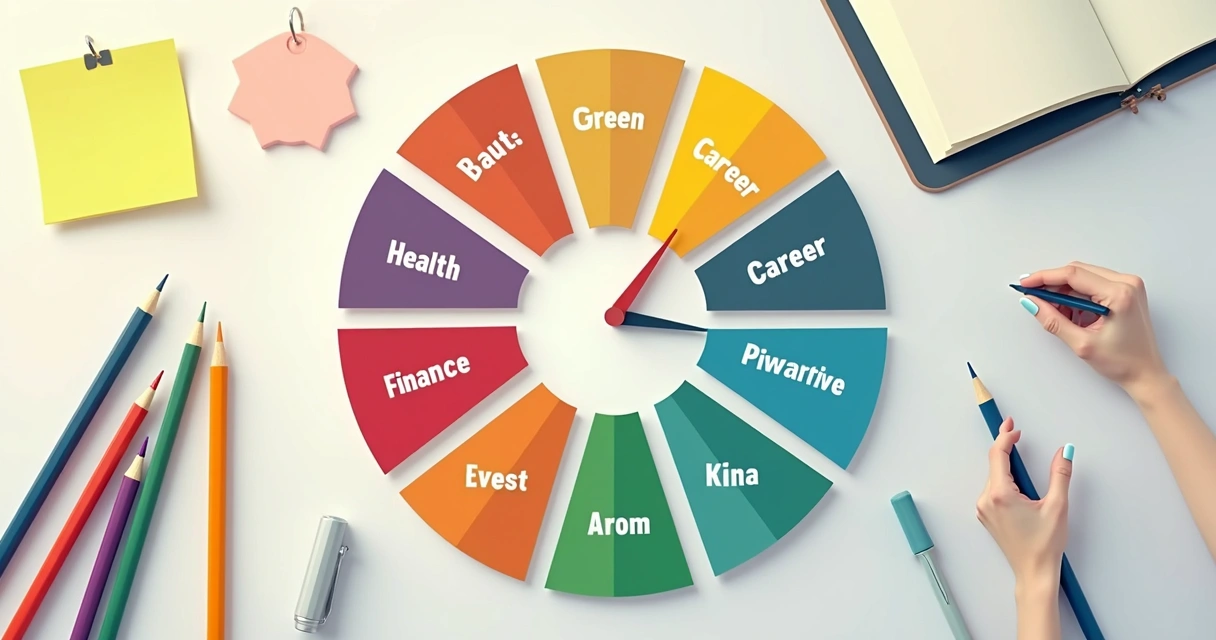
The life wheel is a circular chart divided into segments, each representing a key area of personal well-being, used as a visual gauge of your satisfaction in each domain. The appeal is its simplicity. You rate how fulfilled you feel in each area, shade the segments, and see immediately where the circle is flat or full.
The origins of this idea go back decades, sometimes called “the Wheel of Life methodology.” Coaches and trainers have used the wheel for self-reflection and growth since at least the 1960s. Its popularity grew for a reason: it makes invisible imbalances visible.
When I first tried this exercise myself years ago, I noticed something strange. A few parts of my life—my health, close relationships—looked strong. Others, like leisure or financial satisfaction, stood out as much weaker. The awkward, lopsided shape on the page felt exactly like what it was to be me at that moment. There’s something humbling in that clarity.
Many people experience the life wheel as a “snapshot” in time. But the most enduring growth happens when you return often and let the image shift as your life does. That’s why I support digital versions, such as Wheel of Life, with flexibility to track and revisit progress, as especially meaningful tools for ongoing personal or coaching use.
How the wheel visually represents your life areas
The life wheel typically resembles a simple pie chart or dartboard, sliced into 8 to 12 segments. Each segment stands for a life domain—for example, health, work, finances, love or family, fun, spirituality, learning, and so on.
To complete the exercise:
- Label each segment (more on that soon)
- Rate your satisfaction for each area, usually on a scale from 1 (low) to 10 (high)
- Shade each segment outward from the center to a distance matching your rating
The result is a shape that is rarely round. Irregularities show visually where you feel most whole and where you want change. The effect is immediate. The shape you see becomes the story you feel.
The wheel makes self-knowledge visible at a glance.
But you’re not limited to set segments. If your priorities are unique—if “parenting,” or “community,” or “travel” matter to you—these can easily swap in for classic categories. That’s one reason I find digital versions so helpful, offering customization as life itself changes.
What categories do most people include?
In my experience guiding hundreds through this assessment, certain themes recur. Still, the categories on your wheel should match your actual lived experience, not a textbook list. Common options include:
- Physical health
- Work or career
- Finances
- Significant relationships (friends, family, partner)
- Emotional/mental well-being
- Personal growth or learning
- Fun/leisure/recreation
- Home environment or surroundings
- Spirituality, meaning, or purpose
- Contribution, volunteering, community
Ten categories tend to be manageable—comprehensive yet not overwhelming. But remember: if you’re coaching or supporting someone else, ask them to reflect on what really matters before starting. When people personalize, insights multiply.
Categories and the science of well-being
Numerous studies support the connection between balanced satisfaction across life domains and overall health outcomes. CDC data, for example, shows that while most adults in the U.S. report high satisfaction, younger populations experience more difficulty with mental health and life contentment, underscoring the value of ongoing self-reflection (CDC data reporting high overall adult life satisfaction).
Other studies from the American Heart Association suggest a strong link between higher “life well-being scores” and dramatically reduced risks for major health issues, showing that the act of assessing and improving life satisfaction goes beyond psychology—it’s good for the body, not just the mind.
Step by step: how to use a life wheel for coaching and personal growth
I often walk clients or groups through a process that feels simple, but always yields new discoveries. Here’s the basic structure that works for most, whether you’re working on paper or with an app like Wheel of Life.
- Select your categories. Choose the 8 to 10 life areas most relevant for you—or for your coaching client. If none of the “usual” domains fit, customize freely. The only requirement is that the areas are genuinely meaningful.
- Label the segments of your wheel. Write the names around the circle if you’re using paper. Digital tools will prompt you to enter your labels.
- Rate your satisfaction for each area. I advise rating on a 1–10 scale, where 1 is not satisfied at all and 10 is perfection, nothing left to improve. Spend a moment reflecting honestly before deciding.
- Shade the segments according to your rating, moving outward from the center. The further toward the edge, the higher your satisfaction.
- Look at the shape of your wheel. Where is it “full”? Where does it dip? Which areas pull the shape inward, which extend outward?
- Reflect and discuss. What surprises you? Where do you feel strongest? Which flat spots do you want to address?
- Pick key areas to focus on first—not too many! Choose one or two areas where improvement would have the greatest positive ripple.
- Create practical goals and actions for those areas. Use insights to turn awareness into change. This is where platforms like Wheel of Life shine, helping you build stepwise action plans from your reflections.
- Repeat frequently. Come back to your wheel, rate afresh, and see how the shape changes. This is how small improvements add up to transformation.
Self-coaching with the life wheel is a practice, not a one-off event. Ongoing use reveals not just your static “score,” but your growth over time, which can be especially powerful in coaching or therapy settings.
Why track progress visually?
Having worked with visual thinkers, and those who say they “aren’t visual at all,” nearly everyone tells me that seeing their satisfied and strained areas side by side is a wake-up call.
When you see where your wheel is flat, that’s where change wants to happen.
I’ve even noticed that clients who return months later can remember exactly how their “old wheel” looked. It has a way of imprinting on the memory. That clear before-and-after story isn’t just satisfying—it’s motivating.
With apps like Wheel of Life, you can even export your wheels as PDFs or charts, making it much easier to spot trends and progress. This is particularly useful if you’re working with a professional or reflecting with a friend, but also for those who like to keep personal journals.
Customizing your wheel: life stages, goals, and flexibility
One of the most valuable lessons I’ve learned in using this model is to resist the urge to make it “one-size-fits-all.” The flexibility to define your own categories is the soul of the tool.
During transitions—a move, a job change, becoming a parent—the very areas that matter most can suddenly shift. Why not change the wheel to match? For example:
- Someone caring for aging parents might add “caregiving” or “family obligations.”
- A person focusing on creativity could use “artistic pursuits” as its own area.
- Someone seeking to improve digital wellbeing could include “screen time” or “social media use.”
The life wheel is meant to serve your growth, not force you into predetermined categories. In my coaching practice, I always check in: “Are these still your top priorities?” If not, a new wheel can bring refreshment and insight.
Digital platforms amplify this power by letting you adjust your categories as often as needed, on your phone or laptop—a feature of Wheel of Life I find especially user-friendly.
Printable and digital wheels: when to use each?
Let’s talk about how you can choose between classic pen-and-paper wheels or modern digital versions.
Printable wheels can be meditative and “offline” by nature. The act of drawing and shading can slow the mind and open reflection. Some people love to post their wheels somewhere visible, like a vision board or planner.
Digital wheels, like those found on Wheel of Life, make it easy to update, compare, track, and even record voice reflections. You can export your results for sharing, coaching sessions, or your own records. For people who prefer typing over writing, or who like to set reminders and track changes easily, digital is often the better fit.
There are no strict rules. What matters is choosing the form that encourages you to use the wheel often enough to gain insight and build new habits.
Whether on screen or paper, consistency in self-review is what creates growth.
Turning insight into action: coaching with the life wheel
One common frustration I hear: “Now I see my wheel is flat, but what do I do next?” This is the bridge from reflection to transformation.
The secret to making real change from your life wheel is to translate awareness into focused plans and steps. This isn’t about overhauling your whole life at once. Instead, I guide people to start with a single area—often one that, if improved, would influence other segments as well.
Suppose your lowest area is “social life” and you notice you feel isolated. Instead of aiming for “find 20 new friends,” set a simple goal: “Reach out to one person I haven’t seen in a while this week.” Or if “career” rates low, an action could be to schedule a conversation with a mentor this month.
The tool Wheel of Life has features for setting weekly tasks, writing goals, and tracking achievements. This can make the difference between inspiration and execution.
Mapping your progress visually can boost motivation. Research has shown that when people can see their efforts paying off, habit change and goal attainment become more likely (summary of an American Heart Association study).
Small, regular steps—linked directly to what matters most—change the shape of your wheel over time.
My 10 recommended areas for coaching with the wheel
After working with countless variations, I want to propose ten areas that, in my view, capture the greatest breadth for personal reflection and coaching sessions. Use these as a starting point. Adapt where it suits you.
- Physical health
- Emotional and mental well-being
- Significant relationships
- Career or work life
- Financial situation
- Personal growth and learning
- Fun, leisure, and recreation
- Home environment
- Purpose, meaning, or spirituality
- Contribution, community, or volunteering
Let’s move through each, sharing not just definitions but coaching questions, strategies, and stories I’ve encountered along the way.
1. Physical health: the base layer
For most people, physical well-being is the foundation for all other developments. Studies indexed by PubMed Central have shown that low satisfaction with health directly predicts higher risk for cardiovascular disease—by as much as 80%.So asking, “How is your health, really?” is never shallow—it’s central.
Coaching questions to use:
- How satisfied are you with your physical energy and resilience?
- Do you feel comfortable in your own body most days?
- What simple habits could strengthen your sense of vitality?
I’ve seen profound life changes start with tiny shifts in this segment—a morning walk, a water bottle on your desk, a gentle bedtime routine.
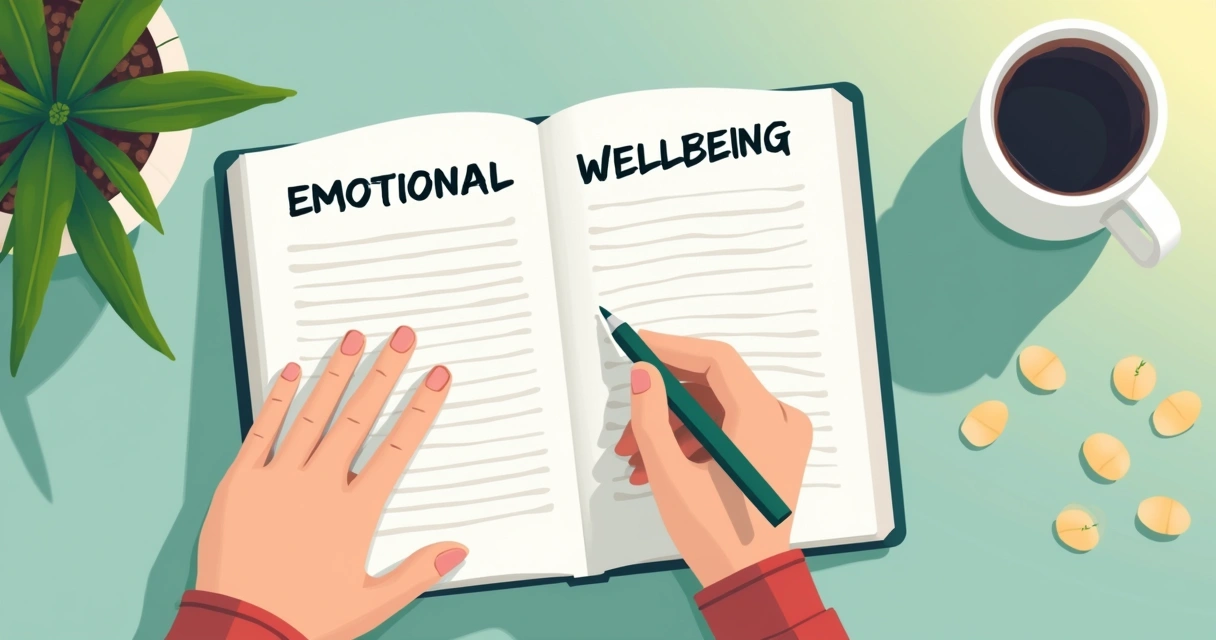
2. Emotional and mental well-being: the heart of the wheel
Mental health deserves its own spotlight. The CDC’s 2023 youth data reminds us how much support is needed here, with 29% of high school students reporting poor well-being most or all of the time in the prior month (CDC mental health study).
I always recommend checking in on both stress and joy. Is life feeling meaningful or overwhelming? This domain often interacts closely with “health” and “relationships”—neglect in one affects the others.
Coaching questions:
- Are emotional ups and downs manageable day to day?
- Do you have outlets for stress relief and creativity?
- Who do you talk to when you feel low?
Often, making space to talk about emotions—without judgment—is a first, transformative action. For more on nurturing this area, I recommend the resources on mental health that complement Wheel of Life assessments.
3. Significant relationships: support and connection
Having even one person you trust is life-changing. Both the width (number) and depth (quality) of relationships matter here—think partners, children, friends, colleagues, even pets when they are a key source of support.
Sample coaching questions:
- Are you satisfied with the closeness and trust in your relationships?
- Do you feel appreciated and loved often enough?
- Is there someone you wish to reconnect with?
For those who rate this low, a goal could be as simple as sending a message, scheduling a meal, or learning a new way to express gratitude. Building a support network is a marathon, not a sprint—but rating it often on your wheel shows progress over time.
4. Career, vocation, or work life: purpose and progress
Our work takes up a huge chunk of waking life. I always encourage people to define this area as fits their current season—it might mean paid work, volunteering, full-time parenting, or other vocations.
Good coaching questions:
- Are you proud of your daily activities?
- Is your career aligned with your values and strengths?
- What is one step that might improve your sense of progress or purpose at work?
Growth here can take many forms—new projects, learning a skill, or even shifting roles. Writer and thinker Parker Palmer once said, “Vocation is where your deep gladness and the world’s deep hunger meet.” Regularly rating this section brings that idea to life.

5. Finances: security and freedom
For many, this segment carries strong emotions—shame, pride, worry—beyond numbers. It can mean daily budgeting or plans for savings and investment.
Coaching questions:
- Do you feel in control of your financial situation?
- Are your money habits serving your present and future?
- What one action would reduce your money stress this month?
Financial well-being is tightly linked to mental health, as well as freedom to pursue other joys. Small actions, like tracking expenses for a week, often shift the needle here. People interested in cultivating financial goals can layer them into their regular wheel reviews.
6. Personal growth and learning: growing your capacity
I’ve noticed that when people feel stuck in other areas, focusing on learning—even something unrelated—can reignite hope.
Questions to prompt deep reflection:
- Are you growing in ways that matter to you?
- What new skill or knowledge has most excited you recently?
- Do you make time for curiosity and discovery?
Learning doesn’t have to mean formal study. It could be reading, art, travel, or new hobbies. Regularly checking your growth and learning segment encourages lifelong curiosity and resilience.
7. Fun, leisure, recreation: joy matters
It’s surprising how often adults rate this area as lowest on the wheel—squeezed out by obligations. And yet, pleasure and downtime aren’t frivolous; they replenish energy for every other domain.
Coaching questions:
- How much time do you have for play, relaxation, or fun?
- What activities reliably lift your mood?
- If leisure is scarce, what could you do in ten minutes weekly?
Often, scheduling even a few minutes of “fun” changes the atmosphere of daily life. Those drawn to work on their well-being and leisure can benefit enormously by addressing this segment with intention.

8. Home environment: your physical space
Where you live can support or drain well-being. This area includes not only the physical space, but feelings of safety, comfort, and “home-ness.”
Questions I like to ask:
- Does your living space nourish rest and inspiration?
- Are there simple adjustments (decluttering, adding a plant) that would help?
- Is your environment helping or hindering your daily life?
Sometimes, small environmental upgrades create outsized improvement in the sense of stability and peace, which often ripple into other life dimensions.
9. Purpose, meaning, or spirituality: deeper fulfillment
Not everyone relates to “spirituality” in the same way, but nearly all want their days to feel meaningful. This area might refer to faith, meditation, philosophy, or devotion to a cause.
Coaching sample prompts:
- Do you experience a sense of meaning in life?
- Are there practices that connect you with something greater?
- How might you bring more intention into everyday routines?
Exploring this segment doesn’t always mean big life shifts—it can be about adding a pause for gratitude, volunteering, or deepening existing spiritual practices. Regular reflection on meaning brings depth even to routine tasks.
10. Contribution, community, volunteering: feeling of impact
I’ve noticed that as basic needs become more stable (health, safety, finances), many people want to give back or feel part of something bigger. Contribution can take countless forms—helping a neighbor, supporting a movement, or simply listening well.
Coaching questions:
- Are you involved in something that benefits others or your community?
- Does helping others energize you or feel overwhelming lately?
- What one small act of contribution could you make this week?
People who feel connected to purpose-driven action often report higher life satisfaction, as supported by American Heart Association findings. For readers seeking more ideas, the autoconhecimento category offers reflection exercises to deepen this area.

Using the wheel for goal setting and continuous reflection
Selecting just one or two low-scoring areas as a focus for the month is a strategic move. I recommend framing goals in positive, observable terms—“walk 15 minutes twice a week,” or “call my sister on Sundays.” Small, repeatable wins beat heroic, unsustainable efforts every time.
The beauty of modern life wheel tools, like Wheel of Life, is the ability to set and track weekly actions, record your thoughts (by type or voice), and generate clear progress reports. Whether for one’s personal journey or to structure a coaching conversation, this makes development visible and motivating.
Each month, check back in. Has the wheel grown rounder? Did shifting one area impact others? Adjust goals and continue. If you use printables, keep them together for a visual diary. If you prefer digital, look for trends across time.
Consistency, not intensity, is what changes the wheel.
Incorporating the life wheel into your routine or coaching sessions
In my experience, the life wheel adapts beautifully to many settings:
- Personal routine. Self-assessment at the start of the month—alone or with a journal—quickly reveals misalignments and new priorities.
- Coaching conversation. Kicking off a new session with a “wheel check-in” grounds the talk in visible evidence. It sets the tone and spotlights growth areas.
- Group workshops. Teams or families can use the wheel as a safe, visual way to share about satisfaction and set collective intentions.
- Therapeutic support. Mental health professionals sometimes build sessions around “the wheel check,” using visual tracking to reinforce progress.
Regardless of the setting, the keys are honest rating, concrete action steps, and regular review. Over time, the wheel becomes not just a tool, but a developmental companion.

Common mistakes and how to avoid them
After years helping people with this model, I’ve observed some repeat stumbling blocks—and ways to sidestep them.
- Aiming for a perfect “10” everywhere. Not every segment needs to be maxed out. Life isn’t static, and priorities shift. Aim for “full enough” for your current life stage.
- Choosing too many areas at once. When everything is urgent, nothing moves. I suggest focusing on 1-2 priority areas for goals. The rest will often shift as a side effect.
- Comparing wheels with others instead of yourself. The only comparison that matters is your own past self to present. Your values create your wheel.
- Neglecting to set specific actions. Awareness alone rarely spurs change. Decide on at least one clear, repeatable step for your main growth area.
- Forgetting reflection and celebration. Marking small wins—however tiny—makes the next step easier.
The more gentle your approach, the more honest your ratings become, and the more true improvement follows.
Wheel of Life: a companion for conscious growth
What distinguishes a simple life assessment from real change is the ongoing attention that links reflection to action. This is why I value the evolving suite at Wheel of Life, with features that let you:
- Customize your functional life categories
- Assess, revisit, and track your wheel over time
- Set and check off weekly or monthly tasks
- Record reflections through text or voice for different reflection styles
- Export visual progress reports for sharing or review
When you take the time to revisit your wheel, you build not just self-knowledge but self-leadership. This is the pattern I have most often seen turn stuckness into movement in coaching and personal development work.
Shape your wheel often, and your life begins to reshape itself.
If you are looking for a tool that can serve your needs, whether you’re a coach or on a solo journey, I encourage you to consider Wheel of Life as a companion. It makes self-inquiry both systematic and human—easy to keep up and deep enough to matter.
Conclusion: your next step toward a more balanced life
We each live on a different terrain, with unique slopes, joys, and challenges. But one thing I have seen repeatedly is this: when you pause to look honestly at your wheel, you open the door to real, meaningful shifts. Not all at once, not with a push for “perfection,” but through small, steady acts of awareness and intention.
You don’t need special skills to begin—just a willingness to shade the segments and tune in to what you discover. Over time, using your life wheel as a regular guide will help you reconnect with what matters most, track your changes, and find new paths forward.
If you are ready to stop living on autopilot and start creating more balance, clarity, and fulfillment, I invite you to visit Wheel of Life, try the tool for yourself, and see where your own wheel takes you next.
Frequently asked questions
What is the Wheel of Life?
The Wheel of Life is a self-assessment tool that visually represents your level of satisfaction across selected key life areas, such as health, career, relationships, finances, personal growth, and leisure using a circular chart segmented into different domains. By rating each segment, you can see at a glance where your life feels balanced and where it feels flat, providing an accessible starting point for reflection and change.
How do I use a life wheel?
To use a life wheel, start by selecting 8–10 categories that matter most to you, label each segment, then rate your satisfaction in each area on a scale from 1 to 10. Shade each section of the wheel outwards to reflect your scores. Review the overall shape, noting imbalances, and set practical goals for one or two areas where you wish to see growth. Regularly update your wheel, using either a printable template or a digital tool, to track your progress over time.
What categories should I include in my wheel?
Include the categories that reflect your real priorities and life context. Common choices are physical health, mental well-being, significant relationships, career or vocation, financial status, personal growth, fun/leisure, home environment, sense of purpose or spirituality, and contribution or community. Customize to suit your season of life—for example, you might add “parenting,” “creativity,” or “digital well-being” if those are top areas for you.
Is the life wheel effective for coaching?
Yes, the life wheel is widely used in coaching for its power to clarify imbalances, set focus areas, and make progress visible. It offers a shared language and visual for coaching conversations, helping clients and professionals move from awareness to concrete action. Digital platforms like Wheel of Life make it especially easy to revisit, track, and refine goals as growth unfolds.
How often should I update my life wheel?
Most experts and coaches recommend updating your life wheel at least monthly to best capture change and maintain awareness. For some, a weekly check-in is helpful, especially when working on specific goals or through periods of life transition. Consistency matters more than frequency—regular review is what enables ongoing growth, adjustment, and successful habit formation.