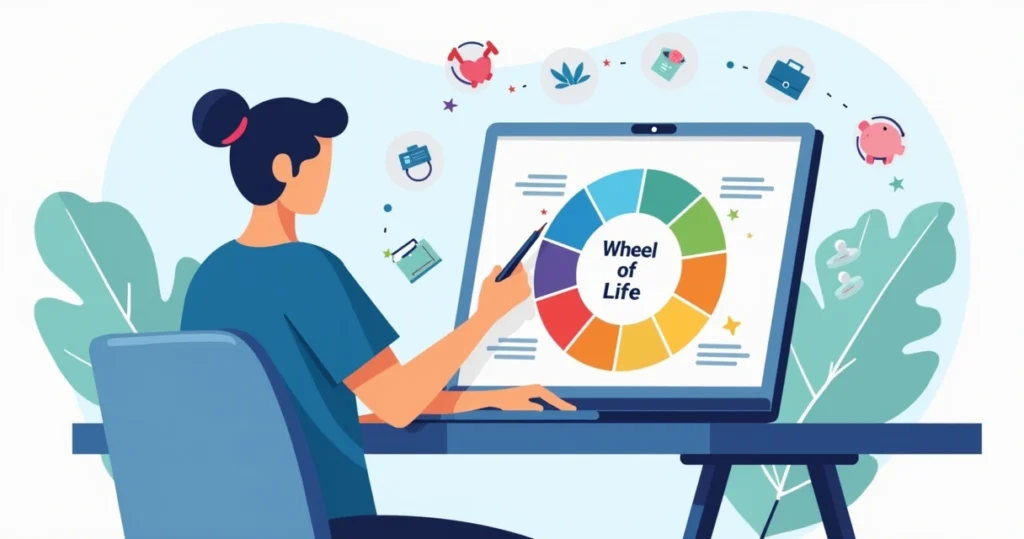
I remember the first time I came across the concept of the Wheel of Life. The idea was simple yet powerful: map out the critical areas of your life, rate your satisfaction, and see the big picture. But there was a catch most people missed. Not everyone’s “big picture” is the same. This is when I realized how much customizing these categories could change the impact of self-reflection and growth.
What is the life wheel and why do people use it?
The Wheel of Life typically spreads your focus across common life areas—health, money, career, relationships, and the like. You rate your satisfaction in each area, and the result is a circle that visually highlights balance or imbalance. It’s a well-known self-awareness tool, and in many ways, a friendly mirror reflecting your life’s current state. But one truth stands out: If the categories don’t match what matters to you personally, the wheel loses much of its meaning.
People use the Wheel of Life for:
- Understanding their priorities and values
- Setting clear and meaningful goals
- Tracking progress over time
- Getting out of autopilot and into conscious living
I’ve seen people surprised at how their wheel looks—some areas stretched thin, others overflowing. It’s simple, but it works. However, it works so much better when personal context drives what’s being measured.
Why one size rarely fits all
One of the most honest lessons I’ve learned is that generic answers give generic results. I once worked with someone for whom “career” didn’t belong on the wheel at all. Instead, “community involvement” and “spiritual growth” carried far more weight in her life. By swapping these, her wheel suddenly made sense—and her reflections became real fuel for change.
Personalization turns the life wheel from an abstract diagram into an authentic reflection.
The Wheel of Life platform makes this easy, as you can edit, add, or change categories anytime. That freedom shifts the assessment from “what I should care about” to “what truly matters right now.”
Customizing: Giving meaning to your growth journey
Customizing your life wheel does more than make it look pretty. It turns self-reflection from a generic exercise into a living document of what actually drives you. In my experience, those who take the time to personalize their wheel often see:
- A deeper sense of ownership over their growth
- Motivation fueled by relevance, not obligation
- A more precise direction for setting goals and weekly action steps
- Less guilt about ignoring “standard” areas that don’t fit
On days when I’ve felt like I was moving in circles, re-evaluating my life wheel—especially the categories—always gave me clarity. Suddenly, new priorities emerged, or former priorities faded away. That’s real-life change, and it stems from deliberately choosing what to measure.

How to personalize your life wheel
Based on what I’ve learned and what the Wheel of Life app supports, here’s a way to make your wheel fit:
- Start with reflection. Ask yourself: “What areas most influence my day-to-day satisfaction? What am I wanting to improve, protect, or appreciate?” Write those down, without worrying if they’re standard.
- Add or remove categories. If a typical area like “finances” isn’t urgent, swap it with something more relevant, like “creativity” or “family time.” The Wheel of Life allows this kind of change easily.
- Name your categories with your language. Instead of “health,” some might use “vitality,” “movement,” or even “energy.” Words matter, because they trigger emotion and meaning.
- Adjust as life shifts. The wheel isn’t set in stone. If you’ve moved cities, started a new job, or changed life stages, revisit your categories. Flexibility means your wheel grows as you do.
- Make it visual. Using different colors or icons for each area, as the platform lets you, can help bring your wheel to life and make progress feel more tangible.
You can get inspiration from stories about growth, choices, and change. Seeing how others adapt their wheels often helps spark ideas for your own.
Turning insight into action that works for you
This is where things shift from theory to practice. Once your life wheel matches your reality, your goals and weekly actions become more authentic—and much easier to follow. Generic categories can lead to generic, unexciting plans. Personalized categories? They lead to specific, motivating steps rooted in what you care most about.
For instance, when I switched “career” to “creative expression,” my goals stopped being about promotions and more about writing regularly. Each week, I tracked a single small action. The sense of progress was real, because the metric was mine alone.
If you’re looking to move from insight to action, organizing your reflections and connecting them to new habits is key. Platforms like Wheel of Life let you do this, not just through typing but with voice reflections and exporting your results into files for coaching or sharing. This makes tracking feel natural, and seeing improvement becomes part of everyday life.
When should you revisit and change your wheel?
I often tell clients—and remind myself—that change is constant. There’s real value in making your life wheel a dynamic document, not a one-time snapshot. I like to revisit my wheel:
- At the start or end of a year or season
- After a life event (new job, move, relationship change, health milestone)
- Whenever I feel stuck or restless
- During a coaching session, if I work with a coach
Each time, I check if my categories still fit. Have my values shifted? Are new priorities emerging? If so, I tweak the wheel. That’s the freedom the Wheel of Life app offers—and it’s where growth becomes personal and ongoing.
Customized wheels reduce frustration and guilt
One reason I strongly encourage personalizing the wheel is that it removes unnecessary guilt. I’ve seen people stressed about scoring low on “social life” when they’re introverts, or feeling bad about “career” when they actually prefer stability over advancement. Custom categories put you back in the driver’s seat and silence the nagging voice that says you should care about things that don’t resonate.
Your wheel should reflect your life, not anyone else’s expectations.
Resources for deeper self-awareness
If you’re interested in going further, there are many articles that can bring insight into goal-setting, well-being, and self-knowledge for your Wheel of Life journey. Good starting points include:
- Goal-setting articles
- Self-knowledge tips
- Resources on focus and organizing time
- Content for well-being and balance
These will guide you as your wheel evolves, helping you dig deeper into what makes sense for you right now.
Conclusion: Make your wheel serve your life
After two decades of helping people with self-development tools, I’ve learned that progress is most powerful when it’s truly personal. Customizing your life wheel is one of the simplest ways to connect your reflection with real growth. Don’t settle for a template built for someone else’s life. Shape your own picture.
Your life is unique. Your growth plan should be too.
If you want to start reflecting with purpose and would like a companion along your journey, try the Wheel of Life platform. You’ll find a tool designed to adapt to you—and that’s where growth begins.
Frequently asked questions
What is a personalized life wheel?
A personalized life wheel is a self-assessment tool where you define your own areas (categories) according to your current values, priorities, and life circumstances, rather than relying on generic categories like health, career, or finances. This way, the wheel becomes an authentic map of what is most meaningful to you right now.
How can I customize my life wheel?
You can customize your life wheel by first reflecting on which areas most affect your happiness and satisfaction. Name each category in a way that resonates with you and matches your present needs. Use a platform such as Wheel of Life that allows you to easily edit, add, or remove categories anytime as your situation or priorities change.
Why does personalization help with growth?
Personalizing your wheel means that your progress, goals, and reflections become specific to your reality, not shaped by someone else’s ideal. This increases motivation, ownership, and the likelihood that your actions will lead to real personal change.
Is it worth it to personalize life wheels?
Yes, in my experience, people who personalize their wheels report more meaningful insights and a greater sense of direction. It removes the pressure to perform in irrelevant areas and replaces it with a focus on what truly matters to you for growth and well-being.
What are the best ways to use a life wheel?
Start by customizing the categories, then rate your satisfaction regularly. Use the wheel to spot patterns and areas needing attention. Set specific, actionable goals based on your wheel and check in periodically—such as monthly, after major life events, or when you feel stuck. Using tools like Wheel of Life, track your reflections over time and turn insight into action for real progress.