
For years, I struggled to keep my energy up past the first weeks of January. Like many people, my ambitions would start strong, only to fade as routines got busy. Over time, I learned that the secret doesn’t lie in willpower alone. The right monthly planning tools can keep me motivated long after resolutions lose their shine.
In this article, I want to share the seven practical ways I use monthly planning tools to stay focused and inspired throughout the year. These steps are for people who, like me, want more clarity and intention in their daily lives. I’ll also show where the Wheel of Life platform fits in this journey, and how it supports not just planning, but real self-reflection and lasting progress.
Reflect before you set new plans
Each month, I pause and ask myself: what worked last month? Where did I feel stuck? Self-reflection isn’t just about looking back—it helps me understand my needs and adjust my goals to real life, not just ideals. I often use a tool like Wheel of Life, reviewing categories such as health, finances, and leisure to see where I’m feeling fulfilled or off-balance.
Before making any plan, mapping how I really feel helps me set goals that are honest and motivating. If you’d like a deeper guide on self-reflection and personal awareness, you could find inspiration in the articles about well-being in the well-being section of the Wheel of Life blog.
Choose a monthly theme or focus
In my experience, having a single focus for the month makes everything simpler. My theme might be “improve sleep,” “finish creative projects,” or “social connections.” This theme guides the goals, habits, and even what I say ‘no’ to. By narrowing my attention, I avoid feeling scattered or overwhelmed.
I’ve noticed that when I pick a focus and remind myself of it each morning—sometimes by writing it at the top of my digital planner—it boosts my sense of purpose. If you’re struggling to pick a theme, reviewing your recent Wheel of Life results may highlight the area most in need of care.
One focus each month brings clarity and calm.
Break down big goals into small actions
Big goals can feel inspiring, but overwhelming. I found that the best approach is to always break them into weekly or daily actions. I use monthly planning tools to list one to three small steps that support my theme. For instance, if my goal is to get healthier, I might choose these actions:
- Prepare three homemade dinners per week
- Walk for 15 minutes every day
- Schedule a doctor’s appointment
By focusing on the next step, I avoid procrastination and celebrate small wins more often. With Wheel of Life, I can assign action items directly to specific categories and check them off, which keeps my momentum going.
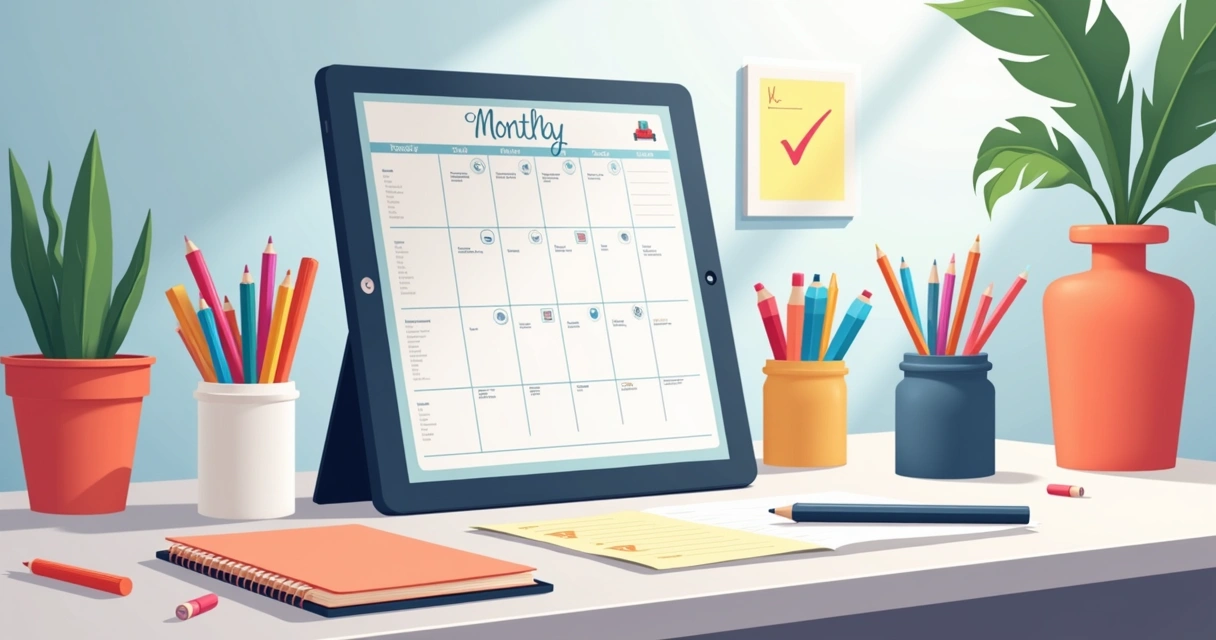
Review your progress regularly
Consistent reviews are key. Every Sunday, I spend just ten minutes checking my progress. I ask myself:
- Did I stick to my main actions this week?
- Did anything get in the way?
- What felt good, and what didn’t?
Sometimes my plans need to change, and that’s fine. Monthly planning tools give me a clear visual record of my consistency. I especially like how Wheel of Life lets me track progress over time by comparing previous “wheels” so I can spot if I’m improving, or if an area needs more attention again.
Checking in with myself helps me course-correct fast, so I don’t lose weeks to small obstacles.
Celebrate wins, however small
I used to think only the big milestones were worth celebrating. Now, I see the value in noticing every tiny step. If I managed to keep up an exercise habit for a week, or finally called an old friend, I reward myself—sometimes by sharing progress with someone I trust, or by giving myself a small treat.
Wheel of Life makes it easy to export monthly reports, which I sometimes use during coaching sessions or personal reviews. Sharing these summaries creates accountability, but it also reminds me of how far I’ve come.
Growth happens in small steps, not just leaps.
Customize your planning tools to fit your reality
What works for me may not fit your lifestyle. One thing I love about digital planning tools like Wheel of Life is the ability to customize categories and plans. You can adapt the wheels to your current life stage, and switch up goals as your priorities shift. For example, in busy months, I might focus more on rest and less on ambition. During times of change, I might create a “transition” category to support myself. This flexibility has kept me motivated through years of different seasons.
For more ideas about goal-setting that feels good, I recommend checking out the goal-setting section of Wheel of Life’s blog.
Make reflection part of your routine
Motivation never lasts if it depends purely on excitement. For long-term commitment, I’ve made reflection part of my monthly routine. I use written notes or voice memos (depending on my energy or mood) to process what’s changing in my life. This helps me update my wheel and action list naturally, rather than forcing myself to follow a plan that no longer makes sense.
If you’re new to regular reflection, consider monthly review questions such as:
- Which area of my life feels strong right now?
- What am I avoiding, and why?
- What lesson did I learn this month?
This kind of self-awareness often makes motivation feel effortless—I want to improve because I see where it matters to me personally.
Bring inspiration from others
Sometimes my motivation comes from learning how others face their struggles and wins. I read stories, join groups, or simply browse through articles from the productivity category of Wheel of Life’s blog. Other times, I read personal experiences, like the example post on how monthly planning changed someone’s sense of balance.
Being part of a broader conversation on motivation and growth reassures me I’m not alone in my ups and downs.

Conclusion: Make motivation easy and natural
In my journey, monthly planning has become less about forcing results and more about making reflection easy. The right tools, like Wheel of Life, adapt to me rather than expecting me to adapt to them. They make it simple to check my progress, celebrate even small gains, and adjust when life changes. If you want to learn more about how monthly planning and self-awareness can work together, you’ll find rich insights in the self-knowledge category of the Wheel of Life blog.
Why not start your own cycle of planning, tracking, and gentle reflection? Visit Wheel of Life to try out the tools and start building the routine that helps you stay motivated all year.
Frequently asked questions
What is a monthly planning tool?
A monthly planning tool is a system or app that helps you organize your plans, actions, and goals for each month—often using calendars, task lists, and reflection prompts to keep you on track. Tools like Wheel of Life support both practical planning and self-reflection, so you focus not only on your actions, but also on your well-being and life balance.
How to stay motivated all year?
From my experience, the best way is to check in with yourself often, break big goals into small actions, and celebrate progress. Using monthly themes, adjusting plans as life changes, and finding inspiration from others make it more natural to stay motivated, not just at the start of the year, but every month after.
Which monthly planner is most effective?
The most effective planner is the one that matches your style and needs—allowing you to customize categories, track progress, and reflect with ease. I find digital tools designed for flexibility and self-awareness, such as Wheel of Life, to be very helpful in keeping up motivation all year.
Where to find good planning templates?
Great templates can be found within digital planning platforms or in blogs dedicated to personal growth and goal-setting. The Wheel of Life blog, for example, offers helpful guides and templates in the goal-setting category to get you started with structured plans and monthly reviews.
Is it worth using digital planners?
Yes, digital planners often make it easy to adjust plans, track progress over time, and organize your reflections in one place. Features like voice notes, customizable fields, and export options make digital planners more flexible for people with changing routines and evolving goals.